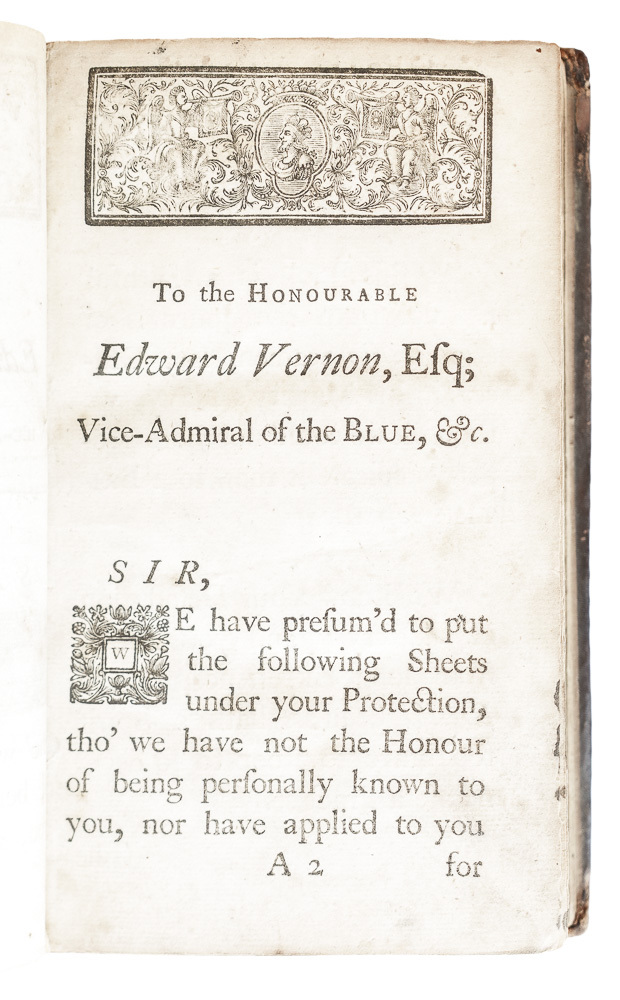
The following is largely taken from Grann (2024) - see reference 1
The Royal Navy squadron that set sail from Portsmouth in September 1740 consisted of five men-of-war HMS Centurion , Glouscester, Pearl, Severn and Wager, a scouting sloop and two small supply ships Anna and Industry. Commodore George Anson was commander of the squadron and captain of Centurion.
HMS Wager, with 250 officers and crew, was commanded by Capt. David Cheap appointed during the voyage after the death of Capt. Dandy Kidd. On board were John Bulkeley, gunner and John Cummins, carpenter who were to publish this account of the voyage and shipwreck on their eventual return to London. The ship was named after Sir Charles Wager the First Lord of the Admiralty.
The group of ships sailed south west across the Atlantic Ocean stopping at Madeira to re-supply. They then sailed on until they reached the east coast of (now) Argentina stopping for repairs at the island of St Catherine. But typhus had already depleted crew numbers and then scurvy began to also take its toll.
They then sailed south past the entrance to the Straits of Magellan and then turned west into the Drake's passage between Tierra del Fuego and the north coast of Antarctica. Here the seas were extraordinarily rough and the winds continuously strong and the Wager lost contact with the rest of the squadron. The crew was severely depleted by sickness and the ship sustained significant damage making it difficult to control and they only avoided shipwreck by the skill of Capt. Cheap.
Cheap's orders were after rounding Cape Horn to re-group with Centurion, Commander Anson and the other ships on the west coast of Chile and pursue the Spanish. However after more than three weeks battling the weather and sickness Wager had not made the progress anticipated and, having no reliable way of establishing longitude, they turned north too early being wrecked on the rocky coast south west of Patagonia on what was to be called Wager Island.
Fortunately the Wager did not sink but was wedged between the rocks. Most of the crew were saved using the small boats carried on the deck of the ship and some provisions, arms, tools and other materials were salvaged.
However sickness was rife among the crew and now they had the bare minimum of rations and had to depend on shell fish and sea weed to avoid starvation.
Moreover the crew started to break into groups and Captain Cheap lost control of the crew. His authority had been diminished as the crew blamed him for turning north too early but also because the crew felt that once they were off the ship naval discipline no longer applied.
Two telling incidents added to the tensions. At one stage the crew bound the Captain Cheap's hands and restrained him - arguably an act of mutiny. On another occasion Captain Cheap shot and killed a crew member - arguably an act of murder.
The only means of escape from Wager Island was by repairing the small boats that had been salvaged from the deck of Wager and, in the case of the long boat, by cutting it in half and cleverly extending it by 12 feet to accommodate more men.
One of the groups which had formed (which did not include Capt. Cheap) was led by Gunner John Bulkeley a man of many talents who kept this journal throughout the voyage. They took three boats - with fifty nine men to start with (and sometimes over seventy) in the modified longboat Speedwell, twelve in the cutter ( soon lost) and ten in the barge. These three boats set off from Wager Island on 14th October 1741 five months after being shipwrecked and over a year after sailing from England. The boats were badly over loaded and at one stage a group that went ashore could not be picked up and so were abandoned. The route they picked was eastwards through the Strait of Magellan - a dangerous narrow channel but more sheltered than sailing through the open sea. Close to starving and always short of water they reached the Atlantic Ocean and turning northwards eventually reached Rio Grande 1,600 miles to the north on 28th January,1742 . Of this group thirty crew from Wager and three marines survived and returned to England.
The other, much smaller group, of eleven cast a ways including Capt. Cheap, and midshipmen John Byron and Alexander Campbell were saved by the local native people known as the Chono. Sailing in the barge, with the Chono in their canoes, they left Wager Island on 6th March 1742 and made their way north along the west coast of Patagonia until a breakaway group stole the barge leaving the others with the Chono in their canoes. When the Chono reached the point where they knew the coastal waters were too dangerous, the group had to make an arduous portage breaking the canoes into sections. Resuming their voyage they crossed the Golfo de Penas eventually arriving at Chiloe Island, a Spanish settlement, in early June 1742- the survivors being Capt. Cheap, mid-shipmen Byron, Campbell, and Hamilton. Cheap, Byron and Hamilton, after being imprisoned by the Spanish, were eventually released and were able to return to England and Campbell returned separately.
Eventually on 15th April 1746 a court-marshal re the Wager affair commenced. Cheap, Bulkeley, Cummins, Baines and Byron gave evidence and the verdict was that Captain David Cheap had done his duty and all the other officers and crew were absolved. The exception was Lieut. Baines who received a reprimand for not alerting the captain when he thought he had sighted land.
John Bulkeley eventually settled in America and it is interesting to note Vice Admiral John D. Bulkeley USN (Retired ) (1911-1996) was one of the United States Navy's most decorated officers of World War 2.